Recovery
A CRS uses a collaborative, strengths-based approach to help individuals move into and through the recovery process. These services are voluntary and free to all Crawford County residents seeking recovery or to maintain recovery. A CRS can serve as the gateway to treatment or as support for an individual to maintain long-term recovery.
Support may include
Where Services Are Provided
A CRS meets individuals where they are in their recovery journey and can also provide support where services are needed, including in the community or at treatment facilities.
Cost and Eligibility
CRS services are voluntary and free to Crawford County residents who are seeking recovery or working to maintain recovery. A CRS can help individuals access treatment or provide ongoing support for long-term recovery.
How to Get Started
To ask questions or initiate services, please call Crawford County Drug & Alcohol at 814.724.4100.
What Happens When People Call?
Phase 1: The First Phone Call & Assessment (Minutes to 1 Hour)
• Initial Contact: You or a loved one explains why you are calling. You do not need a formal diagnosis or a scripted explanation.
• Basic Screening: The admissions team asks questions about substance use, withdrawal or safety risks, physical and mental health, previous treatments, and insurance or cost options.
• Clinical Recommendation: Based on the conversation, the center discusses appropriate levels of care (such as medical detox, inpatient, partial hospitalization, or outpatient services).
Phase 2: Detoxification (First 24 Hours to 7–14 Days)
• Body Stabilization: Medical detox safely clears substances from the body. Withdrawal symptoms often peak around the first 72 hours.
• Symptom Management: Medical staff may provide around-the-clock monitoring and medications (such as buprenorphine, methadone, or other comfort/stabilization drugs) to manage cravings and physical distress.
Phase 3: Active Treatment & Early Recovery (Days 7 to 90+)
• Level of Care Placement: Transitioning into structured care programs like Inpatient/Residential, Partial Hospitalization Programs (PHP), or Intensive Outpatient Programs (IOP).
• Therapy & Counseling: Participation in individual psychotherapy, group counseling, and behavioral therapies to address underlying triggers.
• Brain & Mood Rebalancing: Over the first 30 to 90 days, natural brain chemistry and sleep patterns begin to stabilize, though psychological symptoms like mood swings and cravings can persist.
Phase 4: Long-Term Aftercare & Maintenance (Months to Years)
• Peer Support: Ongoing involvement in support groups like Narcotics Anonymous (NA) or SMART Recovery.
• Reintegration & Relapse Prevention: Executing a personalized aftercare plan that may include continued outpatient therapy, sober living arrangements, and routine check-ins.
• Sustained Recovery: Shifting toward building long-term identity, routines, and community support
RECOVERY Celebration
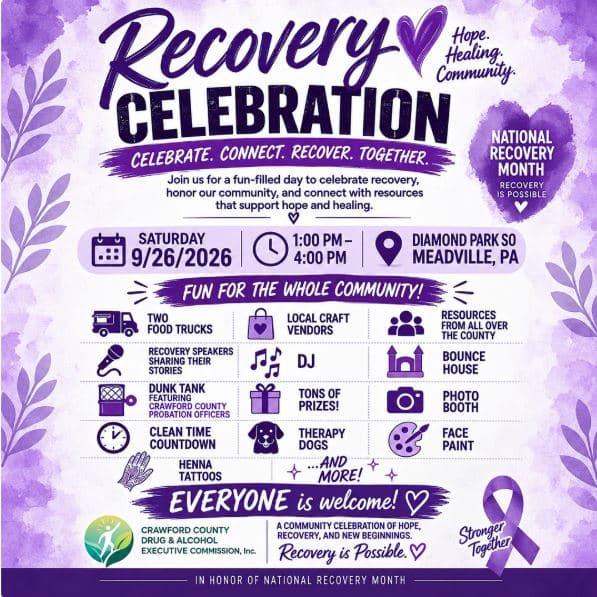
The annual Recovery Celebration is hosted each September in Meadville, PA, to raise drug overdose awareness and celebrate individuals in recovery.
Take the First Step
You don’t have to have everything figured out.
Help is available 24/7. Call 814-724-4100 during normal business hours or after hours 844-643-5766